

Description
-
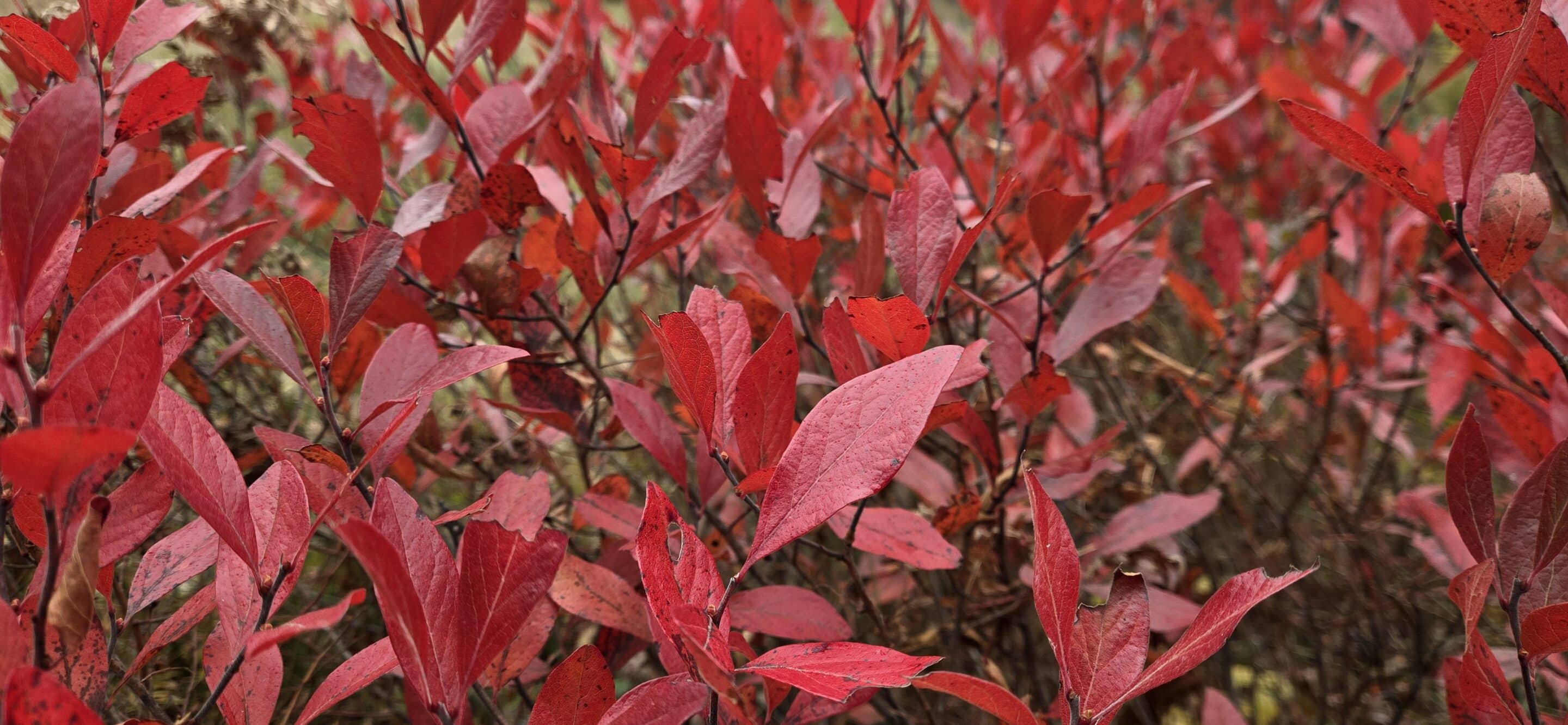
The little plant with a BIG impact; lowbush blueberry is a major economic driver for much of eastern Maine which is the “the blueberry capital of the world”. Bees are brought in to pollinate the flowers when they come out in April, which itself is a major economic driver. (Although I have read that wild, native bees are much better pollinators than the non-native honeybees.) Covering thousands of acres, these ground hugging plants are carefully managed to produce that delicious fruit that we all know and love. Lowbush blueberry fruit comes out in the second half of summer, and are cherished by us and all sorts of other animals who rely on this nutritional fruit, be they feathery or hairy. In the fall, the leaves turn a spectacular crimson color, covering the landscape in a fiery blanket of red. These plants often will grow in “poor” soils; fast draining, acidic, often sandy with little organic matter, and thin in terms of depth. But there is magic in the soil, just out of sight. They manage to grow in such adversity, thanks to their subterranean partners, mycorrhizal fungi. These fungi wrap around and often penetrate the roots of blueberries and help them procure water and nutrients that would other wise be in short supply. The fungi get sugary carbohydrates and other rewards that they would have a hard time getting on their own.
I have noticed and you probably have too, that there can be great variation between different groups of lowbush blueberries, particularly in height. Ones growing in those afore mentioned wide open, sunny fields are usually short, 6″-12″ tall. These versatile plants can also grow in nearly full shade, albeit in a longer lankier form, sometimes reaching over 2 feet tall. Many sources recognize this fact that lowbush blues have tremendous amount of plasticity in the height category. It makes sense; the more adaptable you are the more successful you will be, whether you are growing in a sun drenched field, or the forest floor under a variable canopy.
The plants I offer are typically one gallon pot size. Sometimes they are shorties and sometimes they will be the taller types, but they are all lowbush blueberries. These are all nursery grown, most commonly propagated from root pieces, and that’s okay, because that’s how they grow in the wild. Those giant lowbush blueberry patches typically form from clonal vegetative reproduction. One or two seeds sprout and start the colony. Those big colonies most likely have relatively low genetic variability. This is not uncommon in the plant world; think raspberries, roses, sumac, poplars, great laurel, and so many others. It’s a competitive advantage that these plants have developed over the eons, and that’s not a bad thing.


Reviews
There are no reviews yet.